
Women’s Month – Why Visibility Matters
International Women’s Day on 8 March has symbolised the pursuit of equality and equal opportunities across gender boundaries for over a century. In Germany, its relevance is growing, particularly in technical industries and digital environments, where women remain significantly underrepresented – especially in STEM professions.
According to the initiative Innovative Frauen im Fokus, women currently make up around 18% of the STEM workforce. In degree programmes such as mechanical or electrical engineering, fewer than a quarter of students are often female. At the same time, however, the proportion is gradually increasing: in the 2024 academic year, around 36% of first-year STEM students were women, the highest level ever recorded according to Statistischem Bundesamt.
For ACONEXT, Women’s Month is about showcasing real perspectives. Women’s Week provides an opportunity to highlight who is working on which projects, how teams collaborate, and what impulses can be drawn for everyday work, culture and innovation.
Software.AI in Heimsheim – Shaping Infotainment Together
In Heimsheim, Marie Jeutter, Cindy Speth and Theodora Brandt
take responsibility for infotainment validation – an area where women are still often in the minority within the automotive sector.
Marie leads the project, keeping performance on track while working closely with clients. Cindy combines her role as team lead with hands-on project involvement, while Theodora continuously improves processes and ensures that knowledge is retained within the team.
Together, they demonstrate how successful projects are built on trust, team spirit and clearly defined roles. They actively shape their work, contribute ideas and develop solutions on a daily basis. Technical responsibility is not a question of gender, but of competence.

Future Mobility in Fellbach – Experiencing E-Mobility and Powertrain Performance
In the field of Future Mobility, Julia Janzer and Isabell Baumann
are responsible for the design and integration of electric drive systems for the front and rear axles in vans. After graduating, they joined ACONEXT together and now work on complex powertrain systems.
Their work is defined by interface management, technical expertise and strong team collaboration. Challenges are addressed through continuous exchange with colleagues, knowledge is shared, and solutions are developed collectively.
At the same time, this area reflects the dynamic nature of the industry. According to the VDA, demand for expertise in electromobility and software integration continues to grow – making skilled professionals in this field increasingly vital.
Their key message: Having the confidence to ask questions and learn together is what drives projects forward – especially in future-oriented technologies.

Digital Future – Projects Between Organisation, Delivery and Transformation
Imke Beckmann and Vanessa Lovric
are shaping projects within the Digital Future domain. They are currently working on the replacement of a workforce planning application.
As project lead, Imke maintains a clear view of the overall strategy, while Vanessa, as PMO, structures detailed tasks and ensures smooth execution. Their work highlights that project management goes far beyond planning: it is about making complexity tangible, creating structure and enabling informed decision-making.
This makes one thing clear: women are actively shaping projects in complex industries – not as exceptions, but as an integral part of high-performing teams.

Impulses from Women’s Week for Projects and Culture
ACONEXT Women’s Week illustrates how equality takes shape in everyday project work – not as an abstract ambition, but as a lived reality.
Women take on responsibility, contribute their perspectives and actively shape both technical and organisational processes. At the same time, it becomes clear how crucial teamwork, trust and openness are to project success.
For ACONEXT, this means these impulses are lived 365 days a year; not just during a specific week or month. Women’s Week makes visible what teams deliver every day through their expertise, dynamics and genuine collaboration.
As of 15 January, ACONEXT has officially been recognised as Top Employer 2026. Since 2015, the independent certification awarded by the Top Employers Institute has consistently confirmed that we create working environments in which people can grow, take responsibility and actively shape the future. For us, however, this recognition represents far more than a prestigious label.
The certification is a reflection of our values and our mindset. Which is precisely why we choose to undergo an assessment every year. We firmly believe that excellent services in engineering, IT and tech, as well as consulting expertise begin with people.
For ACONEXT, the Top Employer certification is therefore not a destination, but a constantly evolving point of reference. It challenges us to continuously question existing structures, critically review our practices and drive improvement. The assessment supports us in further developing our HR strategy on a data-driven basis and provides us with honest, external feedback.
To sum it up: We do not pursue our Top Employers’ journey for the appeal of the seal, but our people.
Employer branding at ACONEXT is about values rather than appearances.
As a technology, IT and engineering partner, we develop solutions for the future of automotive, defense and aerospace. This is only possible with people who are empowered to develop professionally and personally.
Our understanding of employer branding is therefore clear:
- Transparency rather than promises
- Development rather than stagnation
- Trust rather than control
The recent Top Employer 2026 award confirms that we are pursuing this path consistently and in line with our values, and that we intend to continue doing so.
Thanks to our HR teams and all the people behind ACONEXT!
This achievement is the result of true teamwork. Our special thanks go to our HR teams in Stuttgart and Munich, who shape our people strategy with great dedication, expertise and passion, under the leadership of Aline Ohnmacht and Ulrike Förster.
We also extend our sincere thanks to all colleagues who work every day to further develop ACONEXT as an employer and a brand. Your collective commitment makes a tangible and measurable difference.
Looking ahead: Being a Top Employer is not a finishing line, but a starting point.
We view our continued Top Employer certification as a significant achievement and a strong validation of our quality as an employer, but never as a reason to stand still or to settle for the status quo.
Instead, the certification serves as both motivation and impetus to keep investing in:
- individual development pathways
- modern work models
- leadership based on mutual respect
- a corporate culture that combines diversity with responsibility
The world of work is changing, and at ACONEXT, we are committed to continuing to shape it proactively.
Conclusion:
For ACONEXT, being a Top Employer 2026 means:
- taking responsibility for people
- making quality in HR measurable
- ensuring that culture is never left to chance
That is exactly why we are proud of this recognition, today and in the future!

The future needs experience – and the courage to evolve
With the majority acquisition of MHR Vertriebs- und Service GmbH in Ottobrunn, the ACONEXT Group is taking the next strategic step into the defense and aerospace industries.
Under its new name, ACONEXT MHR GmbH, a new center of excellence is emerging – one that combines MHR’s engineering and systems expertise with ACONEXT’s strengths in development and digital transformation.
For MHR shareholder Jörg Zorenböhmer and Managing Director Volker Griesbach, this step represents more than just a business milestone – it is, above all, a sign of confidence in the future. “Over the past years, we’ve built a culture founded on closeness, quality, and responsibility. These values will continue to guide us as part of the ACONEXT Group,” emphasizes Volker Griesbach.
Zorenböhmer adds: “I grew up in this region, studied electrical engineering here, and always wanted to build a company that combines technology with humanity. Now, together with ACONEXT, we are taking this foundation to the next level.”
Stronger together – for complex, mission-critical systems
MHR is well-known for its strong capabilities in Integrated Logistic Support (ILS), Quality Management, System Analysis, and Technical Documentation. Going forward, MHR will also benefit from ACONEXT’s deep expertise in Systems Engineering, Electrical and Electronic Development, IT Consulting, and Project Management. The result is an expanded service portfolio that covers the entire lifecycle of complex Defense and Aerospace systems – from concept to operation.
The management team will be expanded to include Andreas Holzinger from ACONEXT Engineering GmbH, who brings many years of experience from the automotive industry as well as in supporting clients in the defense sector to this new market segment.
“MHR stands for precision, customer proximity, and long-standing relationships. ACONEXT contributes digital innovation, scalability, and methodological expertise. Together, we are creating a partnership built for the future,” says Holzinger.
Trust that endures – partnerships that grow
For existing clients, one thing remains unchanged: their trusted contacts Volker Griesbach and Jörg Zorenböhmer will continue to lead the company. Continuity, quality, and reliability remain the foundation of the new ACONEXT MHR GmbH.
At the same time, this opens the door to greater resources, new technologies, and an even stronger network in Southern Germany – including numerous prestigious national and international clients.
Because in an industry where security, reliability, and innovation matter most, collaboration makes all the difference.
Or, as Jörg Zorenböhmer puts it: “Technology is what we do – but people are the reason we do it.”
Erfahren Sie mehr über unsere umfassenden Lösungen im Marktsegment Defense & Aerospace.
As of July 1, 2025, ACONEXT has acquired significant parts of the SPARKS Group. With more than 60 new colleagues joining the teams in Heimsheim and Ingolstadt, a new unit is taking shape under the name ACONEXT SPARKS GmbH – ready to shape the future.
SPARKS stands for technology, precision, and that vital spark of passion that drives innovation. In a challenging environment, the team proved its resilience and strength. It is exactly this spirit we are welcoming into the ACONEXT world – bringing fresh momentum to every phase of the product life cycle.
“Passion for life cycle” now meets technological excellence for software solutions that make an impact.
Strategically, this acquisition opens up new opportunities.
“This transaction is a milestone for us – it enables us to leverage synergies and further strengthen our market position with premium automotive manufacturers,”
says Uwe Hihn, Managing Director of ACONEXT.
He was particularly impressed by the SPARKS team’s expertise, especially in HMI and safety-critical software:
“That fire is exactly what we want to keep alive and build upon.”
The new unit will be led by Steffen Matt, who brings many years of experience with SPARKS and a clear focus on the road ahead:
“Together with ACONEXT, we aim to become a relevant player in software development and testing. This is a true opportunity and a fresh start with real potential for growth.”
Legal support for the sellers was provided by PLUTA Rechtsanwalts GmbH, with restructuring experts Ivo-Meinert Willrodt and Hans-Christian Källner, and legal counsel Martin Jungclaus.
ACONEXT was advised during the transaction by private equity expert Birgit Ausfelder and attorney Dr. Simon Preisenberger from the law firm Watson, Farley & Williams.
Click here to read the full official press release from PLUTA in German.
ACONEXT:
Where did the idea for Digital Future Connect come from? Was there a moment when you knew: This is it – we’re going for it?
Guido:
Over the past few years, ACONEXT has undergone a major transformation – from a traditional engineering service provider to a modern consulting and service partner with a clear focus on digitalization and future technologies in the automotive sector. Today, we are a team of around 800 experts, and our portfolio is broader and more digital than ever before.
What we noticed along the way: Many of our clients still associate us with the “old” ACONEXT – but not with who we are today. The idea for Digital Future Connect was born out of the desire to change exactly that. We wanted to create a platform where we could make our transformation tangible, offer insights into our Digital Future division, and engage in conversations with our clients about the challenges and opportunities of digital mobility.
For me, it was clear: this is exactly the kind of event we need – not someday, but now.
Rene:
At the end of 2024, I also felt that we needed to get even closer to our customers – to better understand their needs and expectations and to position our portfolio in the best possible way. So why not invite them to us? We wanted to offer something truly worthwhile – something that would make it worth their while to come to Fellbach.
Then Guido brought up the idea of involving our employees as well. After our first few conversations, it quickly became clear to both of us: this is exactly what we’re going to do!
ACONEXT:
Guido, you lead the “Digital Future” division – what does that term mean to you personally? And how does it drive ACONEXT forward?
Guido:
“Digital Future” is much more than a buzzword to me – it represents a mindset. It’s about not just accepting change, but actively shaping it. In my view, it means not just implementing new technologies, but using them in a way that creates real value – for our clients, our employees, and the entire industry.
At ACONEXT, that’s exactly what the Digital Future division stands for: we combine technological expertise with deep industry knowledge, bringing innovations like AI, data analytics, and digital twins right where they’re needed – into our clients’ development processes.
That not only moves ACONEXT forward from a technical perspective, but also positions us as a true partner – one who speaks the language of OEMs and suppliers, while providing fresh impulses for what’s next.
ACONEXT:
Rene, you’re deeply involved with our clients and their projects – where do you see a clear need to talk about future topics like Software-Defined Vehicles or Artificial Intelligence in a different way than we have in the past?
Rene:
In my view, the current situation in the automotive industry clearly shows that we need to rethink our approach. We have to adapt to a new generation of buyers with different expectations. Especially here in Germany, staying innovative is crucial – otherwise, we risk being overtaken by other countries.
It’s evident that we need to rethink not only the product, but also the processes behind it. Of course, topics like Software-Defined Vehicles and Artificial Intelligence are important drivers – but the list goes far beyond that. Powertrain concepts, production and development costs, IT tools, and innovation in general all play a major role.
ACONEXT:
What were your top priorities when shaping Digital Future Connect – and what did you want to do differently from a typical industry event?
Guido:
What mattered most to us was that Digital Future Connect would become more than just another industry event. No one-way communication, no endless PowerPoint presentations – but a real experience that inspires and puts dialogue at the center.
That’s why we developed a concept that combines variety, depth, and interaction: our marketplace allows different ACONEXT teams to showcase their expertise and full range of services – in a compact, hands-on, and personal way. This is complemented by expert talks on real flagship IT projects from within our company, demonstrating how we bring digitalization to life in a very tangible way.
A special highlight for us is the keynote by Prof. Dr. Stark from TU Berlin – a thought leader who brings fresh perspectives on digital transformation in the industry. In short: we didn’t want a conventional event; we wanted something that inspires, connects, and shows what ACONEXT stands for today.
Rene:
From the very beginning, we wanted an event that would captivate both our employees and our clients. It needed to be dynamic and diverse – as innovative as it is engaging, with a wide range of digital topics. In other words: far more than just a showcase of ACONEXT.
ACONEXT:
Guido, looking back at the preparations – what’s been your standout moment so far in the lead-up to Digital Future Connect?
Guido:
My personal highlight so far has definitely been the inspiring collaboration across the entire division – cross-functional, creative, and full of energy. It was truly impressive to see everyone pulling in the same direction to refine and present our topics, ideas, and projects so clearly.
What I’m especially proud of is that, as part of the preparation, we took the opportunity to sharpen, structure, and modernize our entire portfolio. This process wasn’t just important for Digital Future Connect – it also gave us, internally, a whole new shared understanding of what we stand for and what we can offer our clients.
ACONEXT:
Rene, as you reviewed the content and speaker selection, what moment or realization stood out to you the most?
Rene:
For me, the real aha moment came right at the beginning – the moment we made the firm decision to go ahead with the event. From that point on, the collaboration with our organizing team was incredibly energizing. Everyone approached it with so much passion and commitment, and that spirit really set the tone for everything that followed.
Choosing the keynote speaker was actually the easy part. I’ve known Rainer Stark since the 1990s – our paths first crossed at Ford in Cologne. Even back then, he was a pioneer in digital product development, and for me, he became one of the true founding figures in that field.
ACONEXT:
What lasting impression do you hope to leave on the participants when the event wraps up and they go home?
Guido:
I hope our guests leave the event feeling: “That was different – and it was worth it.”
They should get to know ACONEXT in a new light – as an innovative, digital, and genuinely strong partner. Ideally, they’ll take away concrete impulses for their own projects, new ways of collaborating, or the next technological leap.
If by the end, they’re inspired, filled with fresh ideas, and genuinely interested in continuing the conversation, then we’ve done everything right.
ACONEXT:
What do you think: Will there be a second Digital Future Connect, or is this meant to be a one-time event?
Guido:
I’m pretty sure this won’t be the last time. If Digital Future Connect sparks what we hope for – inspiration, exchange, and genuine connection – it would almost be irresponsible to keep it a one-time event.
I see Digital Future Connect as a format with a future: one that grows, evolves, and continuously brings fresh impulses. So, we’re definitely thinking ahead.
Rene:
It was a lot of work, no question about that. Still, I truly hope this format has a future. But let’s wait and see what the participants say. Hopefully, the answer will become clear on its own after the event.
The interview for ACONEXT was conducted by Magdalena Zalewski.
ACONEXT:
Thorsten, in 2021, you joined ACONEXT with 14 colleagues from an insolvent company—today, your team has grown to 80 people. What challenges did you face back then, and what were the key factors in building such a successful division?
Thorsten Turlach:
One of the biggest challenges was the timing—early 2021, the COVID-19 pandemic had a firm grip on the German economy, and short-time work was at its peak. A key success factor was ACONEXT’s trust in bringing an entirely new department on board. Another decisive factor was the company’s broad technical portfolio and a highly competent HR team that finds the perfect project-candidate match for almost every request.
You were already responsible for the Powertrain division, and now you are also taking over Commercial Transport. What does this step mean for you personally, and how does it change your strategic approach?
Over the past four years, our team’s expertise has grown far beyond just powertrain systems. Today, we work on a variety of drivetrains for different propulsion systems: battery-electric vehicles with and without fuel cells, as well as traditional and hydrogen combustion engines. The electrical control of these vehicles is becoming increasingly important, and more and more driver assistance systems are now legally required.
You’ve been working in commercial vehicle development for over two decades. What has changed the most in that time, and what will be the key focus in the years ahead?
Until 2020/21, the focus was on optimizing traditional powertrains to improve efficiency and reduce fuel consumption. Then, a small revolution took place—commercial vehicle development suddenly moved in multiple directions: alongside fully electric vehicles, hydrogen-powered fuel cells and combustion engines were developed simultaneously.
The challenge in this new transport landscape is that businesses still need to generate profit with these vehicles. That means they must pay for themselves within four to five years. This requires not only advancements in propulsion technologies but also the necessary infrastructure to support them.
Leading a team of 80 is no small task. How do you shape the culture and team spirit as a leader? And what defines a strong, innovative team for you?
One of the biggest challenges is maintaining cohesion, as our team is spread across the entire Stuttgart metropolitan area. Regular in-person and digital interactions, as well as an open-door policy, ensure that my colleagues can always reach out to me.
A healthy work-life balance, along with a good dose of fun, is essential to successfully delivering projects for our clients. We collaborate with our customers as equals, working on projects with enthusiasm and pride in our results. For me, it is crucial to reflect that pride back to my team through genuine appreciation.
What are your concrete plans for the Trucks & Commercial Vehicles division? Which trends and developments are you particularly excited about?
Battery-electric trucks are already well-positioned, with ranges exceeding 500 kilometers. The number of required truck charging stations for urban and commuter traffic will soon be available in sufficient numbers.
What will be particularly exciting in the next two to three years is the strategic direction for alternative long-haul propulsion. Will fuel cells or hydrogen combustion engines prevail? How will the supporting infrastructure develop? The evolution of emissions regulations will also play a key role—after all, hydrogen combustion produces significant amounts of water vapor. This will open up an exciting new field of development that we will pursue with great dedication.
You’re a passionate pilot. Do you see any parallels between flying and leadership? What lessons from the cockpit help you in business?
There are quite a few similarities between a flight and a project. At the start, you must carefully assess the conditions and requirements—just as you go through a pre-flight checklist before takeoff.
During the flight, you constantly monitor the weather and terrain, adjusting course to avoid a storm or navigate through mountains. The same applies to projects—continuously tracking progress, solving issues, and making necessary adjustments.
A landing begins with initiating the descent well in advance. The final project milestones are particularly crucial for success—making last-minute changes can lead to disaster. Just like in aviation, there’s a checklist for that, too!
Remember: A perfect landing is a controlled crash from the height of a beer bottle—no higher, no lower. The same goes for projects—hitting the right spot is everything!
Magdalena Zalewski conducted the interview for ACONEXT.
Since 2016, our strategy has been to continuously improve as an employer—from fostering a strong company culture to ensuring individual employee satisfaction. Alongside other companies from various industries operating worldwide, we are committed to the guiding principle: “For a better world of work.” To truly make the working world a better place and lead by example, we have been raising our standards year after year. The world around us, as well as our workplaces, are constantly evolving, and we strive to meet these changes with trust and transparency.
The Top Employers Institute programme certifies organisations based on the participation and results of their HR Best Practices Survey. This survey covers six HR domains consisting of 20 topics including People Strategy, Work Environment, Talent Acquisition, Learning, Diversity, Equity & Inclusion, Wellbeing and more.
Top Employers Institute CEO David Plink says:
“Consistency in a not-so-consistent world? Amidst constant change—through technological advances, economic shifts, and evolving social landscapes—it is inspiring to see people and organisations rise to the challenge. This year, the Top Employers Certification Programme highlights the dedication of our Top Employers as they continue to set the standard, consistently delivering world-class HR strategies and practices. These Top Employers strive to foster growth and wellbeing, all while enriching the world of work. We are proud to celebrate these people-first leaders and teams as the Top Employers for 2025!”
The Top Employers Institute has recognized over 2,400 Top Employers across 125 countries and regions on five continents this year.
These certified Top Employers, including ACONEXT, positively impact the lives of more than 13 million employees worldwide. The Top Employers Institute’s certification is a global benchmark for excellence in HR practices, reflecting our company’s commitment to being—and remaining—a top-choice employer.
With its globally leading certification and data-driven insights, the Top Employers Institute supports companies like ACONEXT, enabling them to implement transformative HR practices, drive business success, and attract, engage, and retain top talent.
We look forward to confidently tackling the challenges that 2025 will bring while always prioritizing the well-being of our Passioneers.
In his role, Marcel combines technical expertise with strategic project management to develop modern and efficient software solutions. Together with his team, he actively shapes the digital future of the automotive industry.
A Department Where Technology Meets Strategy
In the Software Development domain, Marcel has established a structure that considers both technical details and the strategic aspects of project management. His team is divided into two specialized groups: The Developer Community, focusing on creating new features and further enhancing existing systems, as well as the the Project Management Community, ensuring that projects are efficient and goal-oriented.
Both groups meet on a biweekly basis to discuss specific topics, sharpen knowledge, and plan all next steps. Their core activities include:
- Knowledge Building: Promoting expertise and technical know-how.
- Templates and Best Practices: Developing standardized templates and defining efficient work methods.
- Process Optimization: Continuously improving workflows to address both technical and organizational challenges.
A Broad Range of Software Development Subjects
Marcel and his team work on a wide variety of projects, including the development of software solutions, such as web applications, mobile apps, and standard software. Application management is the second pilar of the teams’ activities, covering the coordination, control, and maintenance of software solutions during development and in ongoing operations.
Their development approach combines agile methodologies such as Scrum, Kanban, Design Thinking, and SAFe with tried-and-true waterfall methods. Software quality is ensured through efficient, situation-specific test strategies that adhere to ISTQB standards; both within classic and agile setups.
Additionally, the team integrates modern technologies like cloud services (e.g., Azure, AWS) and cutting-edge IT architectures to deliver solutions that are both sustainable and cost-efficient.
Customer Satisfaction at the Core
A central focus for Marcel and his team is working very closely with their clients. Together, they identify requirements and develop solutions that stand out due to cost-efficiency, transparent documentation, maintainability, and high quality.
As Marcel sums it up:
“It’s about combining modern technologies with well-thought-out methodologies to create sustainable and future-proof solutions for our customers.”
Did you know that you can find many more insightful articles about our experts in our Newsblog?
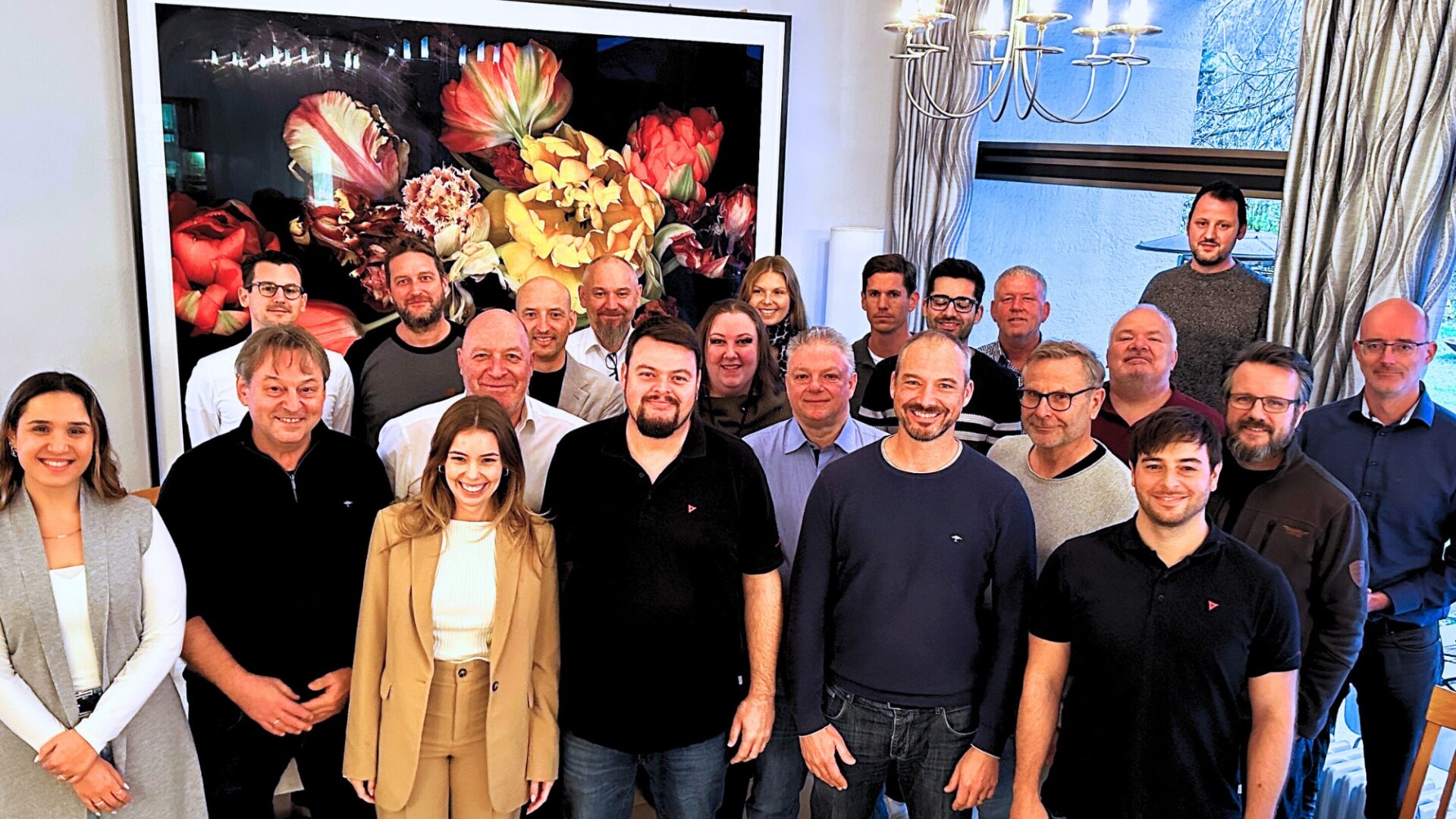
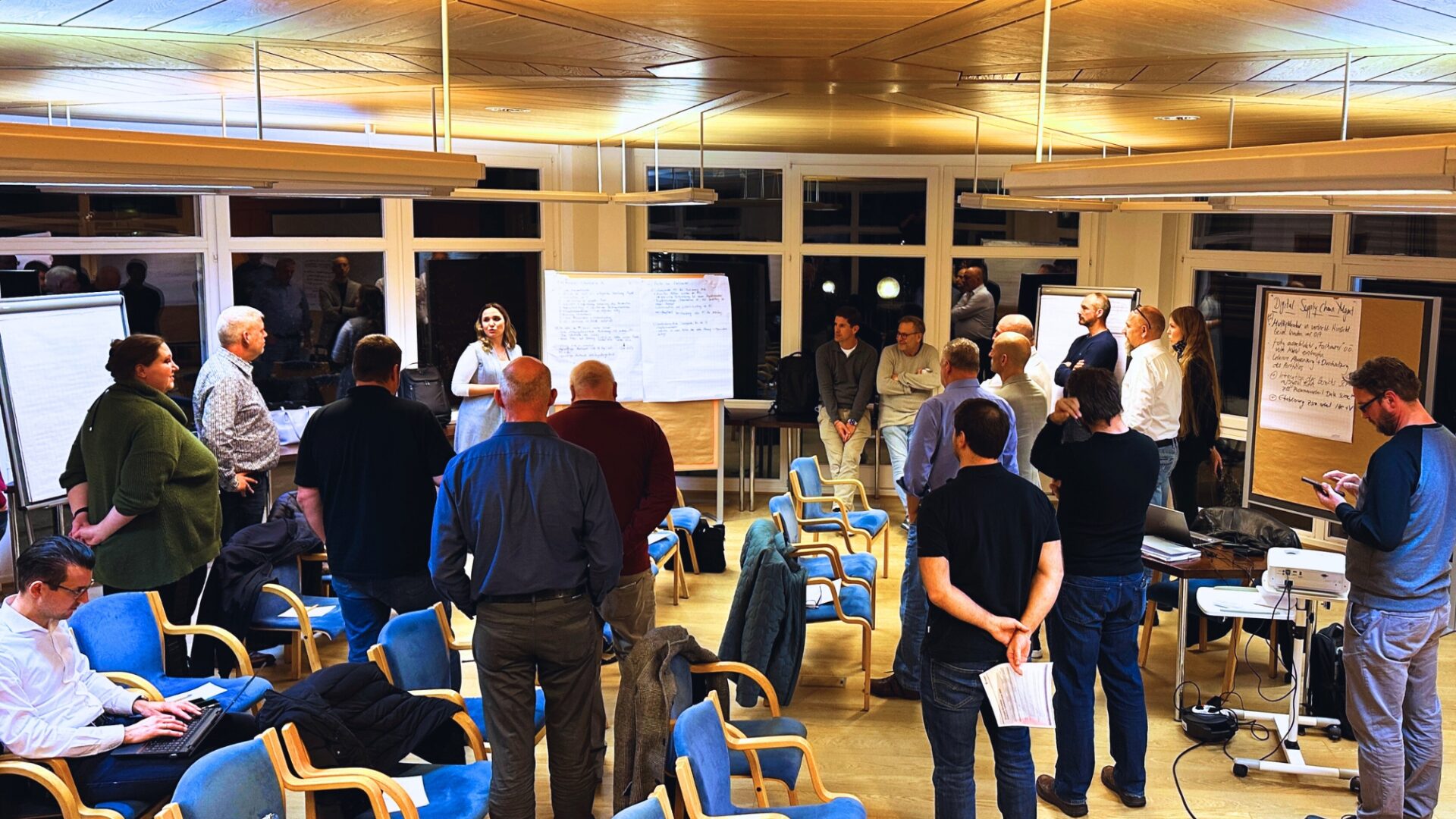
In November 2024, the managers and experts of the Digital Future division came together for an intensive strategy workshop. The aim was to develop future-oriented ideas, sharpen strategic approaches and define concrete measures for the coming year. Two days full of enthusiasm, creativity and collaboration laid the foundation for a successful 2025.
Day 1: Review and goal definition for 2025
The first day began with a review of 2024. The department heads presented their most significant projects, highlighted successes and challenges, and thus created the basis for setting goals for the future.
In particular, the event emphasized the importance of close collaboration with the individual subject matter experts. Interactive sessions were held to define strategic priorities and develop corresponding measures. The focus was on topics such as knowledge transfer, strategic competence development, sales reinforcement, clear role and hierarchy definitions, and stronger client orientation.
Highlights
- Knowledge Transfer & Collaboration: Fostering communities of practice and interdisciplinary exchange.
- Strategy & Competence: Building customer-specific expertise and developing professional roles.
- Sales & Projects: Intensification of sales, development of offers and offshore solutions
- Organization & Roles: flatter hierarchies and clearly defined responsibilities.
- Client focus & innovation: combining IT and engineering expertise to create new solutions.
The workshop participants wrapped up the evening with a relaxing wine tasting. They were given the opportunity to demonstrate their teamwork and gain new inspiration in an atmosphere that was both laid-back and creative.
Day 2: Strategic realignment and sales professionalism
The second day began with an overview of the 2024 target performance, presented by division manager Dr. Guido Vielsack. This was followed by a presentation of new departmental structures, which are perfectly aligned with the Digital Future portfolio. In addition, participants discussed how flatter hierarchies and agile working methods should enable even more efficient collaboration in the future.
Another key topic on the agenda was the professionalization of sales. Through close cooperation between sales and department leads, specific measures were developed for the future to provide our clients with even better support and ensure sustainable business success.
Conclusion: the workshop marking the end of the 2024 financial year was a tremendous success: two productive days full of creativity, strategic discussions and strong team spirit. With a clear vision and a motivated team, the Digital Future division is well-prepared to start off 2025 strong.
Today, we are focusing on Roland Baldenhofer, our expert in SAFe® Training & Coaching, Lean Portfolio Management, and Agile Methods. Roland joined the ACONEXT team in 2023, bringing over 20 years of experience in transforming organizations through lean-agile-methods.
Diversity and Versatility Across Industries
Roland has successfully introduced lean and agile practices across a variety of sectors, including insurance, retail, banking, pharmaceuticals, telecommunications, and manufacturing. His extensive experience has enabled him to guide agile projects and transformations tailored to diverse organizational needs.
Since SAFe® (Scaled Agile Framework) was first released in 2011, Roland has been working with this framework from its very first version. Over the years, he has led successful SAFe® transformations in both medium-sized companies and major DAX-listed corporations.
What is SAFe®, and Why Is Its Implementation No Standard Procedure?
SAFe® is a proven framework that enables organizations to scale agile practices beyond individual teams to enterprise-wide implementations. Unlike Scrum or Kanban, which are primarily focused on individual teams, SAFe® aligns multiple levels of an organization – from teams to strategic leadership – ensuring seamless collaboration and alignment.
“Agility is a business discipline with clear goals. Lean-agile approaches empower organizations to adapt to ever-changing market demands and remain flexible,” Roland explains.
However, successful implementation of SAFe® requires customization for each organization. Roland emphasizes, “Every company is unique.” Factors such as compliance requirements, customer behavior, employee structures, and product offerings vary significantly, making a one-size-fits-all approach ineffective.
Balancing Innovation and Cost-Efficiency
SAFe® provides organizations with a systematic approach to Agile transformation while keeping the balance between innovation and cost-efficiency in check. Roland notes, “In the transformation process, it’s crucial to combine Agile methods with the right tools and resources to maximize success while managing development costs effectively.”
This balance is especially important for larger enterprises where multiple teams and levels must work together to achieve company-wide agility. A key aspect of this process is lean portfolio management, which helps organizations align their budgets and resources with strategic goals. This ensures priorities are effectively managed within an Agile environment.
SAFe® in Practice: Tailored Training and Coaching
Roland places a strong emphasis on actionable, practical training. “Participants should learn how to implement lean-agile approaches directly in their specific work environment,” Roland explains. His approach focuses on hands-on learning, ensuring that the benefits of SAFe® are not only theoretical but also immediately applicable to real-world challenges.
Roland offers customized training sessions where participants learn to apply agile practices effectively at team, program, and portfolio levels. This practical introduction to SAFe® ensures organizations reap the full benefits of their transformation, streamlining daily operations from day one.
People First
One of Roland’s core principles is the focus on people driving transformation. “It’s about ensuring that employees, management, customers, and stakeholders not only understand the new ways of working but can also thrive and find satisfaction in this transformed environment,” Roland says.
This human-centered approach fosters sustainable change, transforming not only how work is done but also reshaping the company’s culture for the better.
Roland’s Final Thoughts?
“The implementation of SAFe® is not a one-time solution but an ongoing process that strengthens collaboration and flexibility within an organization, empowering it to continuously evolve,” he concludes.